At Black Diamond Adventures (BDA) we are known for running programs and outdoor adventure camps that are exceptional learning experiences, uplifting for all involved. How exactly do we do that?
Developing youth through purpose, skills and timeless traditions in an outdoor adventure camp.
There are some unique aspects to our approach and culture that help each student grow in confidence, capability and character. And with skilled leaders nudging levers and working as personal coaches it is not uncommon for many students to experience personal breakthroughs during their outdoor ed program.
Physical / Comfort Zone
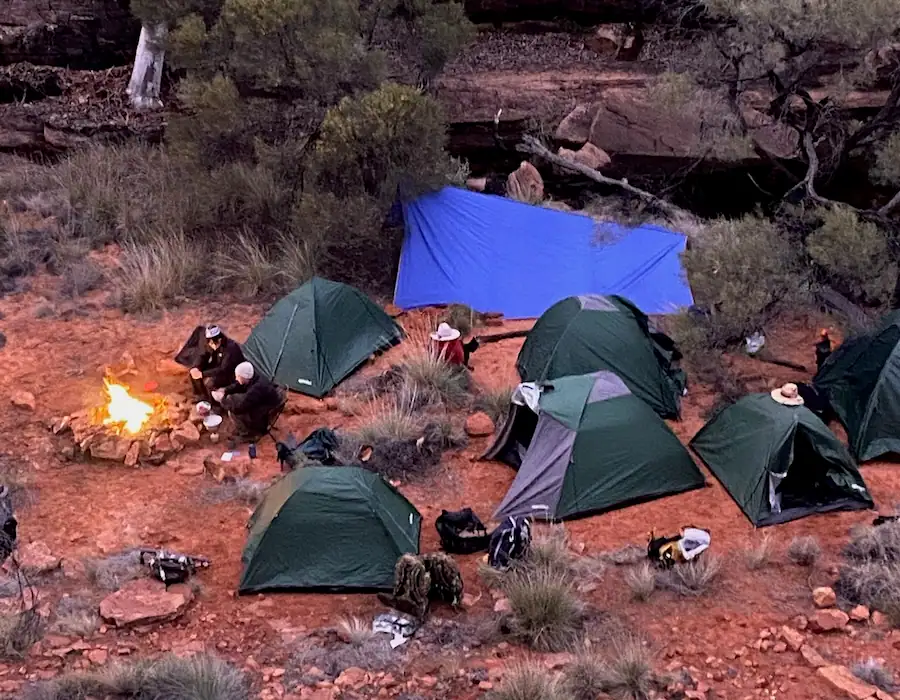
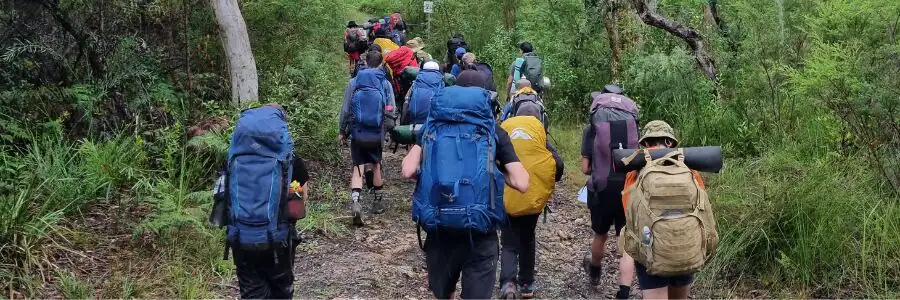
Adventurous Journey obviously requires physical exertion and stepping outside of one’s comfort zone – particularly when elements are outside of one’s control. The activity, environment, weather, one’s personal ability, and self-organisation, can present varying challenges to participants.
According to Managing Director of BDA, Rob Mann, this is fundamental to the learning environment. “Being challenged enables students to discover they can rise to the occasion; they can work together to achieve goals, there is more to them than they think. Overcoming physical challenges or seemingly uncomfortable situations can be highly rewarding. This is a key component to many outdoor education programs. At Black Diamond we don’t shy away from bad weather, early starts or long days,” said Rob.
Getting Personal
One of the hallmarks of our organisation is how our team is fully invested in each participant. Each leader is responsible for 10 – 20 students and makes a point of knowing their names within 30 minutes of their meeting. It is important for our leaders to bond with students and for trust and respect to be quickly established, noted Rob.
Our leaders watch students closely throughout the day, listening to what is being said and not said, absorbing body language and other cues./p>
“Our team is highly skilled and experienced. There is a lot of information coming at you if you know what you are looking for and how to use it,” said Rob.
Student Tracking & Accountability
Black Diamond Adventures also engages students in monitoring their own progress through a self-assessment scorecard.
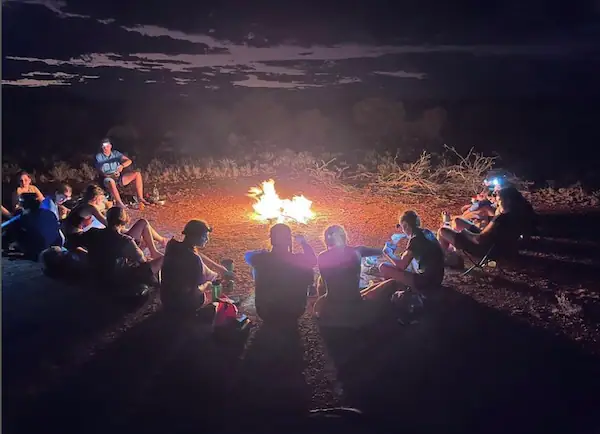
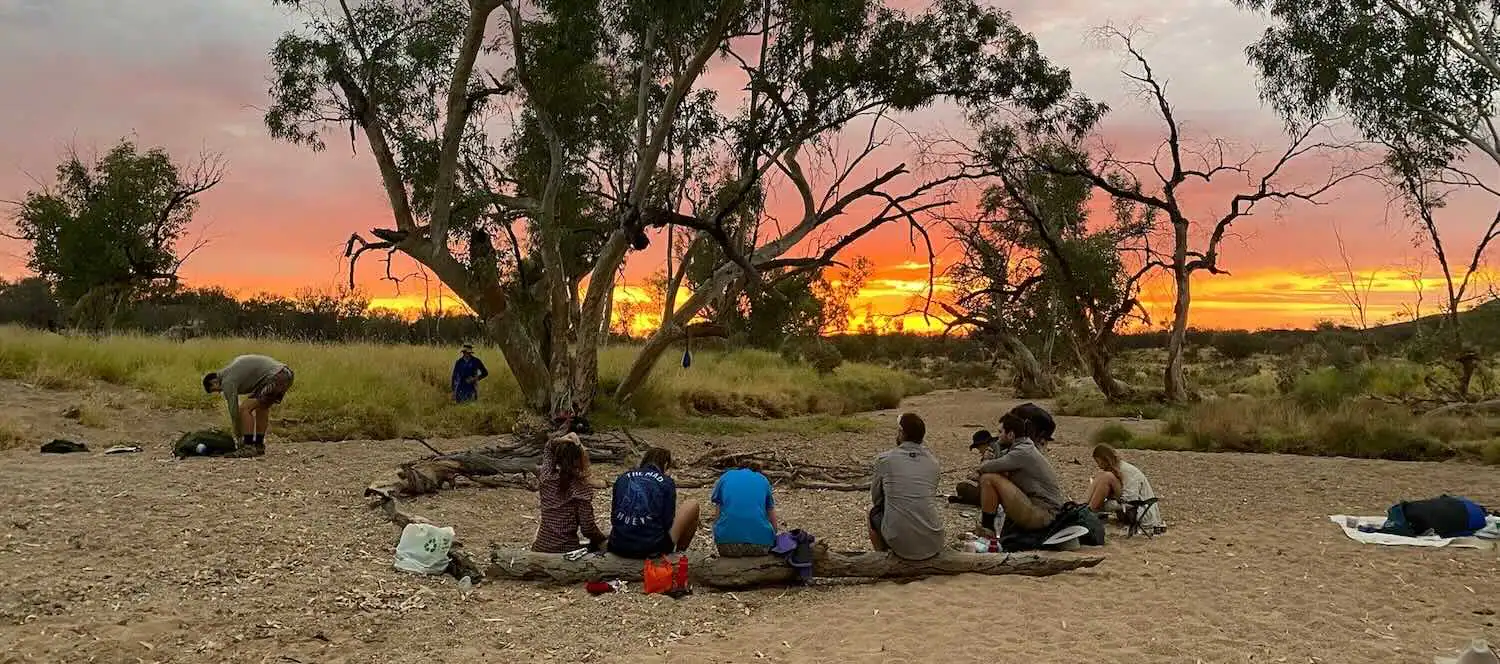
Each night in the yarning circle a student will be quietly asked how they are tracking on a score of 1 to 10 – with the higher number being a better outcome.
The number given represents an intrinsic feeling that the student has about where they are at. It encompasses many things, such as their confidence, happiness, feelings of belonging, contributing, being valued, safe, the degree they can trust others, their energy levels and more. It’s a holistic reflection that is an average of many inputs.
“For our leaders it gives them a read-out of where each student is at each day and what the student and the instructor can do to lift a score,” said Rob. “For example, if a student reports an 8 then two days later reports a 6 – which is unusual – but if it happens – that is an alert for our leaders to reflect and see if there is something they have missed. It makes our leaders more accountable because our aim is for students to be moving forward and upwards. So this forces our leaders to ask themselves, what can I do to move this person to a 7 and 8? How can I engage with them more and make them feel a bit more connected?
“At this juncture we also invite the student to tell us more about that number and or feeling. We ask, what would get you up to an 8? In this way each student can focus on that number and what aspects they can work on to improve their number. It fosters greater buy-in and responsibility,” said Rob.
Yarning Circles
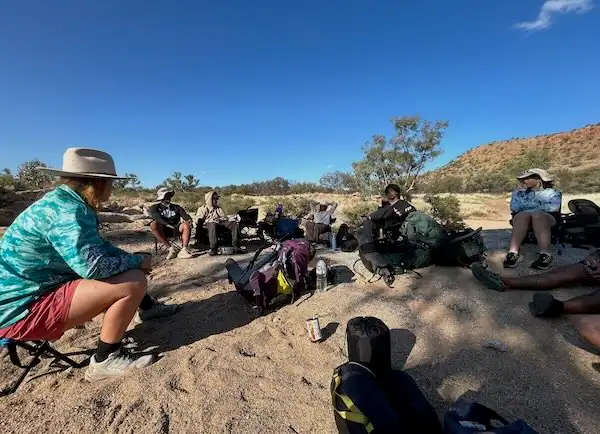
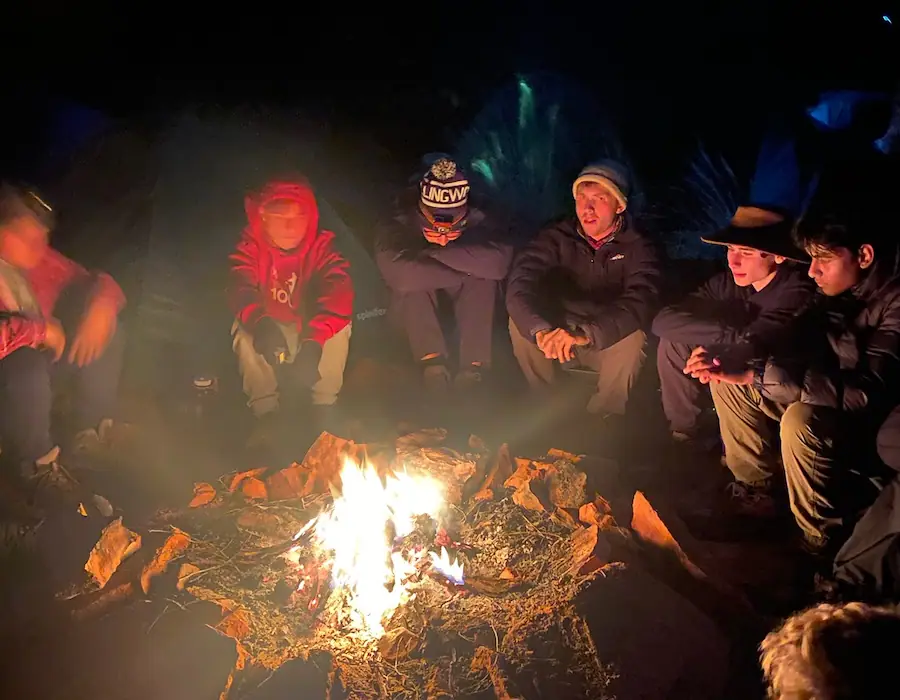
Fireside chats (literal or figurative) are another tool that BDA instructors employ to develop reflection, resilience, character and teamwork.
On our outdoor adventure camps, these are done nightly in a yarning circle, embracing a time-honoured indigenous tradition of sharing and storytelling. The construct of the yarning circle lets students share with the group and with the night, without necessarily having to face someone as they are speaking. Over time they gain the courage to do that if they want to.
Black Diamond leaders discretely guide conversations through themes for each yarn with a structure that provides a safe and supported environment for sharing.
“We have basic and firm agreements in place,” said Rob. “Only one person can talk at a time. There are no comments or jokes when someone else is speaking. It’s fine for each student to have an opinion and a different opinion that they are welcome to share when it is their turn to talk.”
Rob noted that on longer trips the yarning circles evolve to a point where leaders and students can have in-depth conversation because people feel safe and free to share their thoughts, feelings and fears.
“It’s a very special process that we are privileged to facilitate,” he added. “And while each group is different, for our leaders there is little that will surprise them. Still, these yarns are valuable not just to the development and growth of our students – they also benefit our leaders.”
The Final Number
For Black Diamond Adventures the final yarn of any trip is quite momentous.
While Instructors have tracked each student’s daily rating the final yarn on an outdoor adventure camp is where each student shares their final number.
“We often get big numbers throughout a program particularly near the end,” said Rob.
Along with the numbers, instructors review each student’s body language, their tone of voice, their comments and interactions with others, summing up the totality of their human experience on the program.
“It’s a great moment to hear a student say: “I’m tracking a 10 day” and to know it’s for real,” said Rob.